

I finished this essay about Halloween II (1981) on the 14th for 31 Days of Halloween, but ended up revising and line-editing it until the 15th. Don’t care, still counts.
Here are some thoughts about Halloween II, the film that caused all the problems with Halloween.
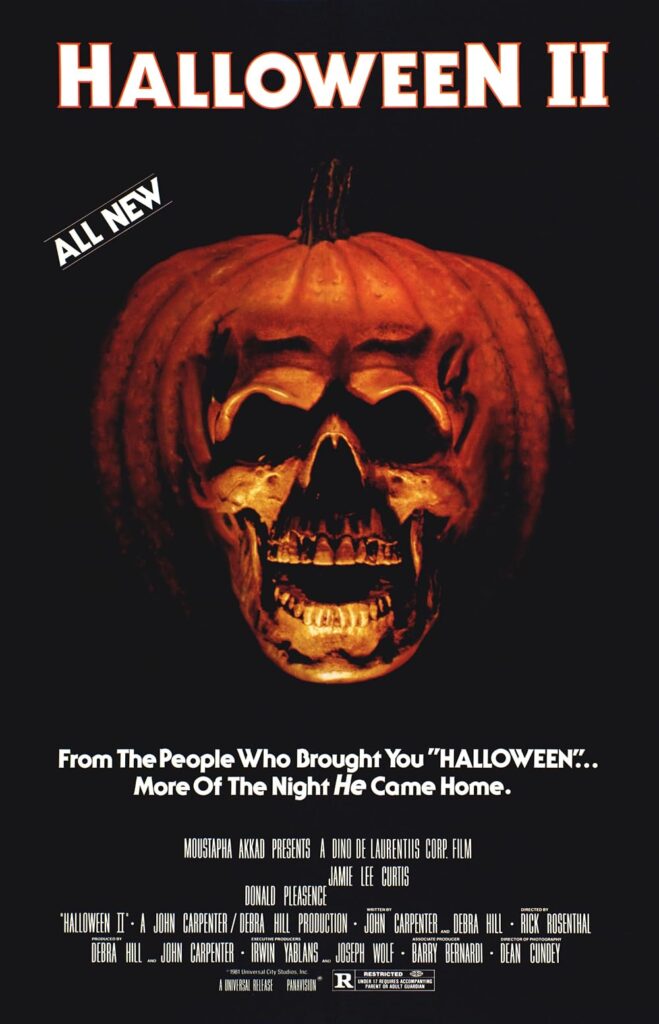
I sit firmly in the camp that Halloween II (1981) was a mistake. John Carpenter has gone on record, time after time, to mention his own negative-to-complicated feelings about the sequel. In the man’s own words, sourced from a /Film post by Miyako Pleines titled “John Carpenter Had Some Harsh Opinions About Halloween II”:
He goes on to explain his feelings toward “Halloween II,” calling it “an abomination and a horrible movie,” which seems a tad bit harsh. “I was really disappointed in it,” he says. “I don’t think [Rosenthal] had a feel for the material. I think that’s the problem, he didn’t have a feeling for what was going on.”
And it should be noted this is the man who signed off on the sequel.
To this day, every issue with the Halloween franchise can be sourced back to this film. The problems extend beyond Rick Rosenthal, the director of Halloween II, and can be traced back to decisions made by John Carpenter and Debra Hill as producers. The entire film was a misguided attempt to alleviate studio pressure. In the capitalistic scramble, the team had become convinced they had something with the sequel concept, only for it to sow the seeds of the never-should-have-been franchise’s destruction. Even the recent David Gordon Green reboot trilogy’s issues emerged in the wake of Halloween II.
I have said it before, and I will say it again. Halloween (1978) should have never gotten a sequel. It was a perfect little movie in a lot of ways and the presence of the sequel, despite the original’s quality, does tarnish the overall strength of the 1978 classic. Halloween II is what ruined the franchise, which should probably never have existed, and proved the fodder for every poor decision that haunted the series forever after.
Beer and Contracts
The sequel was, in many ways, written under duress. Carpenter and Hill had considered a sequel under much different circumstances, years after the events of the original film, but still focused on Michael Myers pursuing Laurie Strode. It had likely been a passing sketch of an idea that didn’t generate too much interest outside of producer Irwin Yablans, who seeing the success of the first film, wanted a sequel. At this time, however, Carpenter and Hill were deep into the treatment of The Fog (1980) and there is a whole production lawsuit in the mix here over the production rights to The Fog and Halloween II. It’s not super exciting, but Halloween II being birthed of a tension of obligation says a lot.
It also says a lot that the intent was that Halloween II was meant to end the Michael Myers story and shift gears to an anthologized approach which would only ever be seen in Halloween III: Season of the Witch (1982). Even in post-release interviews, Carpenter emphasized that Michael Myers, Laurie Strode, and Sam Loomis were done.
But before that came the writing process, and one of the most famous things about that is Carpenter’s writing ritual of hammering out the script with a six-pack of Budweiser. Describing his writing, he has said about the process that it “mainly dealt with a lot of beer, sitting in front of a typewriter saying ‘What the fuck am I doing? I don’t know.'”
While the franchise-shaping twist of Michael and Laurie being related was not in the original draft, it emerged in the haze of “What the fuck am I doing?” as production rolled on. As Carpenter stated, it emerged “purely as a function of having decided to become involved in the sequel to the movie where I didn’t think there was really much of a story left.”
The Siblings; or The Contextualization of Michael
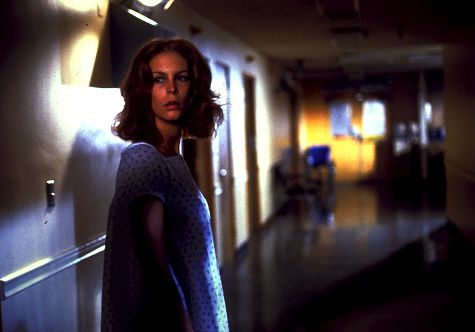
The worst part of Halloween II, for me, will always be the familial link between Laurie Strode and Michael Myers. It feels cheap and nonsensical in so many ways, but I also understand why it emerged in the pressured production where a writer must try anything to give the story depth. Laurie being Michael’s secret sister is one of the writerly moves to create depth and drama in a work-for-hire approach to writing. It’s all the more disappointing thinking about all of this in terms of the original film, which was in many ways revolutionary and treated as a little more than a rinky-dink babysitter murder flick.
The heart was not in the writing, and it shows. But I understand that, that desire to try to inject something written for the paycheck. I am not going to compare my experience in ghostwriting copy for dental practices to writing a sequel to a revolutionary film – but there are times you want to inject a little personality into the work and to make it your own. Often it doesn’t work because the writing doesn’t come from a desire to create something that really says anything. Carpenter didn’t even wish to direct Halloween II. The heart was not there, and the desire to make something interesting about something where no passion is involved means taking swings to try to inject meaning or Greek-style tragedy without really thinking about why one is doing that.
And again, there is that whole sticky issue of contextualizing Michael Myers – the Shape – and making the inscrutable scrutable. Michael works best when he is not explained. Giving him an explainable purpose tears down the very things that frighten us about the man. It is doubly disappointing the purpose is so rote and uninspired.
The Druids; or The Mythification of Michael
Michael’s supernaturalification emerges from ancient druidic magic. It was an angle Carpenter clearly found fascinating, since it also managed to work its way into the unrelated Halloween III: Season of the Witch. By the time of Halloween 5: The Revenge of Michael Myers (1989), Michael was a supernatural killer.
The beginning of this all emerges with Loomis noticing the writing of “Samhain” in a school classroom, written in blood. Writing in blood is inherently creepy, but Michael has this interest in the druids after fifteen years of near-catatonic isolation at Smith’s Grove Sanitarium makes no sense; it’s tacked-on weirdness. That tacked-on weirdness is the permission John Carpenter sows into his script for future writers to go supernatural.
Where Michael, The Shape, was once an unknowable evil human driven by mystery to deadly pursuits, but now there is the ‘Samhain’ angle that would eventually come to make him a supernatural slasher.
Gimmick Slayings; or Murder as a Punchline
For lack of better terms, Michael’s murders in Halloween 1978 felt raw, brutal, and realistic. It was all atmosphere – terrible, brutal, and realistic depictions of death perpetrated by a mad man. But, in Halloween II, we get death by boiling in a hydrotherapy tub. It feels cheap and gimmicky – something more along the lines with Jason Voorhees than the practical, animalistic brute slayings of Michael Myers. Drowning can fit that model, but the drowning and boiling feels too much like something pulled from a lesser slasher.
Madcap Haddonfield; or The Loony Loomis Effect
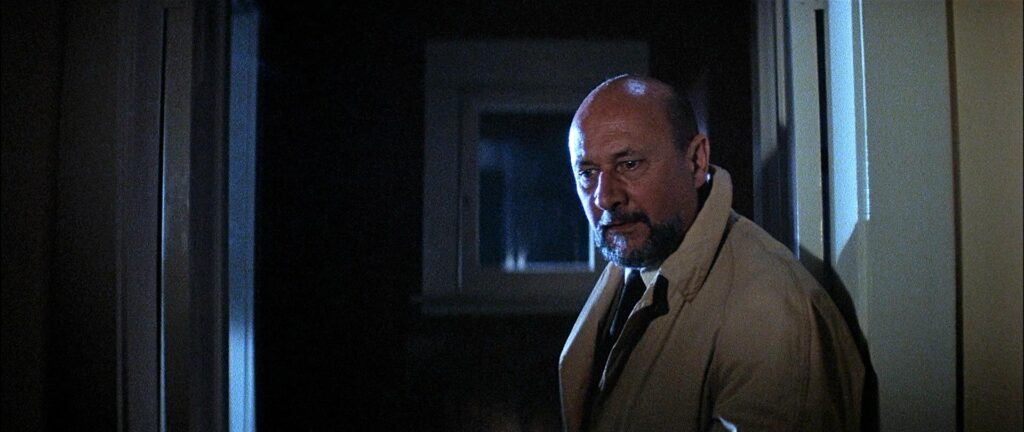
Haddonfield never recovers as a location following Halloween II. The tragedy is undeniable and their being haunted by the events of 1978 are logical. What is at issue is that the town takes on an almost loony mania to Michael Myers sightings and devolves into vigilante justice in such comedically extreme ways that it comes off as zany as opposed to frightening.
This trend also exemplifies the character decay of Loomis; in Halloween (1978) he is an obsessive doctor fixated on the evil of his patient, but there is a realism to that. He’s embittered because nobody listened to him, he’s frustrated because he is the only one who truly understands the evil depths of his former patient, and he is paranoid because he fears Michael and has had numerous close calls with death over 24 hours.
But the Loomis of Halloween II is a trigger-happy, gun-toting madman. In perhaps the film’s most darkly comic moment, he draws a gun on Ben Tramer (the boy Laurie liked in the original film), who is dressed similar to Michael for Halloween activities (Michael’s mask was a retail object, after all) and chases the teen into traffic. Tramer is then hit by a police-cruiser, pinned against another car, and then burns to death. Nothing about this moment treats it with the seriousness it deserves; not the film, because it is weakly written and directed, nor in Loomis himself, whose fixation on Michael is paramount. Does Loomis feel bad about the death he caused in his paranoid gun-toting action? Ostensibly, but if your impression is that he’s more disappointed that the charred corpse isn’t Myers, well, you’re probably right.
The film also features a prescient scene as the manhunt for Michael continues; local neighbors have found the Myers house and begun throwing rocks at it, seemingly about to demolish the house by sheer force of will. Bad gas travels fast in a small town and Haddonfield; target on their mind, they rally to do something – even if it is just to destroy.
Again, prescient to future installments of the series. After all, “evil dies tonight!”
The David Gordon Green Era; or Course Correcting to Nothing
David Gordon Green and Danny McBride’s trilogy tries so hard to course correct from the rotten foundations of Halloween II they essentially horseshoe back to committing the same poor decisions, rendering the reboot sequel trilogy an unsuccessful mess.
As it stands, the sequel Halloween (2018) is largely good, perhaps the third best Halloween film (‘78 and Halloween III are the first and second, respectively). It is a smart sequel that explores lingering trauma of a survivor 40 years after the original film and wisely only operates from the existence of Halloween (1978) – dumping the messy continuity.
Druidism and the supernatural? Gone. The sibling relation established in II? Rendered into a punchline – instead creating a much more interesting family dynamic in the form of the three Strode women.
Yet, things slip through. The gimmick deaths return, but the film’s emphasis on brutality serves as such an aesthetic shock they feel appropriate to a sequel informed by four decades of horror evolution. I don’t mind them as much as the film keeps them consistent within the tone established in the movie. Michael’s “tooth” drop in the rest-stop being a great tone-setter in this case.
Of course, mad-cap Haddonfield and Dr. Loomis-lite (Dr. Sartain) helped establish the more problematic elements of the successive two films. Sartain is aintnetional downgrade from Dr. Loomis, but his emphasis on the belief of Michael as an evil entity, even providing Michael with his mask to seemingly revive him. This is directly forecasting the supernatural element of the trilogy’s ending, Halloween Ends (2022).
Meanwhile, the town’s obsession with memorializing the deaths of three teenagers four decades earlier (mercifully lampshaded by a teenager in the present) feels overwrought, especially as the film ignores Halloween II entirely. Surely there is a tragedy at heart, but Haddonfield seemingly revolves around that. Meanwhile, the new teenagers of the franchise are of the “school-shooting” generation. The town is so hung up on a triple homicide years ago, but does little to curtail the threat of a local mass shooting when you really think about it.
Haddonfield of the Green and McBride trilogy is a mirror to Laurie, who burned down everything in a fearful trauma response, and was unable to let go, cutting herself off from her family because she developed a Loomis-like obsession with Michael.
Hell, the sequel, Halloween Kills (2021) revisits the hospital setting of Halloween II, the residents of Haddonfield grow into a violent mob, an innocent man dies, and their fixation reaches its peak with the chant “Evil Dies Tonight!”
This has been an installment of Graphic Content; support my writing by joining me on Ko-fi.
