



Today, on 31 Days of Halloween Vol. II, I ended up watching V/H/S/Mixtape (2026) on a particularly bad day and did not enjoy myself. I can’t help but wonder if my negativity coming in, unrelated to the film, still colored my perspective. Thankfully, one short in the anthology release stood out and gave me something to write about. In fact, I’d argue that Mixtape’s “The Music of Mr. Sze” was better than yesterday’s Other Mommy experience.
In any case, I process my mood through writing, and I gotta say I feel a bit better now. So check this out and let me know your thoughts.
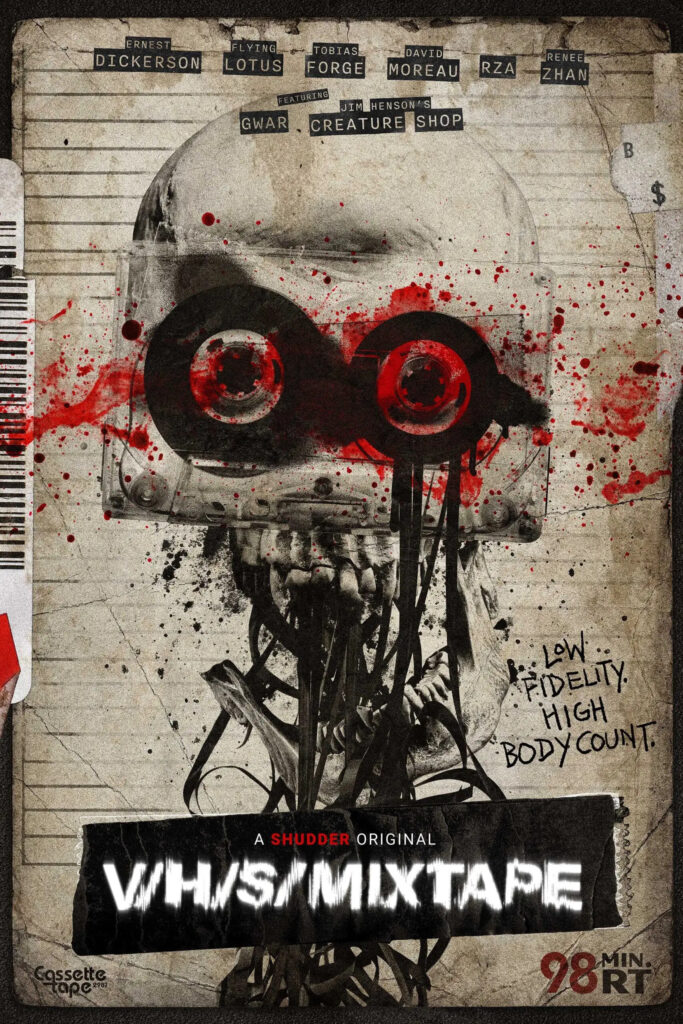
I was not particularly thrilled with V/H/S/Mixtape, the latest in the long-running anthology series that has become a Shudder staple. I don’t want to dwell on my dislikes and my disappointments, though. My biggest concern is that it seems the franchise is willing to abandon the found footage angle so casually that I am not exactly optimistic about their announced SCP edition.
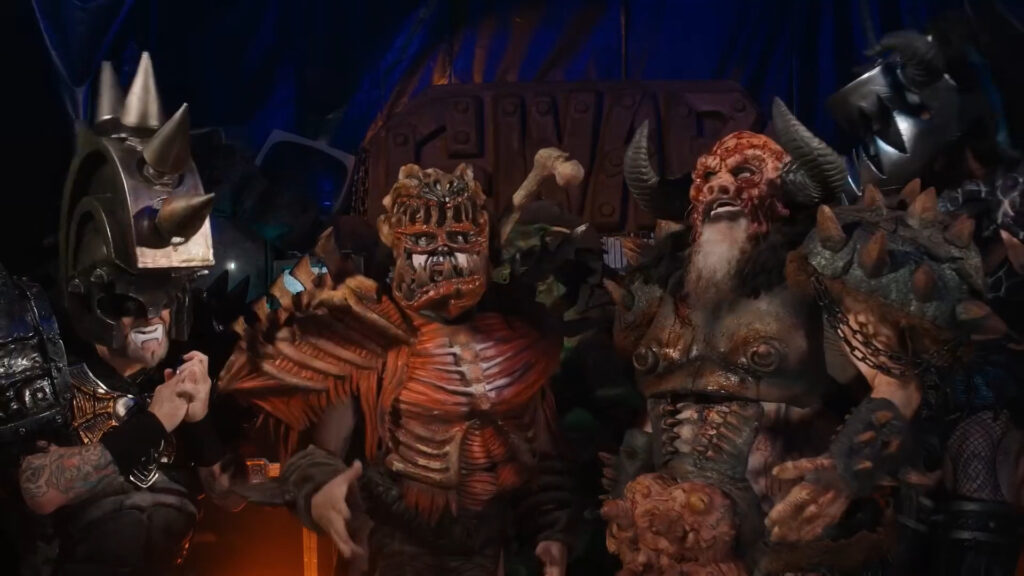
One short, the visually interesting “Another House,” by Flying Lotus, did not fit the concept of the overall franchise, despite a rather impressive stop-motion style. Additionally, as fun as real-life action figures GWAR can be, their wraparound segments did not match the found footage aesthetics of previous installments and ultimately did little to actually serve as a throughline like wraparounds in previous editions of V/H/S/. The theme, also, was loose – with “mixtape” evoking music, one may expect music to play a larger role than it did. One of the shorts was more about an absence of sound creating madness.
With all of this said, there was a bright spot in this edition, and maybe one of the better segments of the series as a whole. While I may have some quibbles with it, “The Music of Mr. Sze” ended up being a pretty faithful modernization of H.P. Lovecraft’s “The Music of Erich Zann.” But one aspect of the short film challenges me in a way that I am unsure if I agree with the choice or not. Specifically, it relates to the interpretation of found footage.
On “Erich Zann”
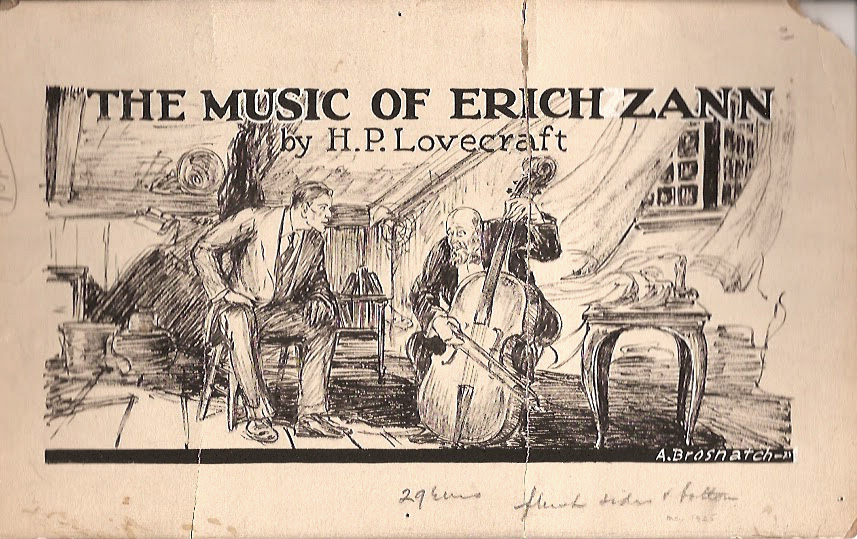
If you have never read “The Music of Erich Zann” it is one of Lovecraft’s better short pieces that evokes all of the cosmic horror you may want and leaves more questions than answers. It is available to read for free through the H.P. Lovecraft Society.
In a very broad summary, our narrator, a young man, moves into a cheap room in a dilapidated boarding house where he begins to hear music from the attic. In the attic is a tenant named Erich Zann, a mute musician who plays the viol in a local orchestra. When he returns home, he continues to play at night, including some strange, unearthly melodies.
The narrator eventually befriends the man, fascinated by the music. However, the man panics when the narrator hums the strange music that he had heard. The musician eventually asks the man to move to a lower floor. However, that doesn’t stop the narrator from hearing a particularly frenzied session, which he investigates. It is revealed that the music is meant to hold something back. The narrator sees an encroaching void, Zann is dead and still playing, and the narrator flees the home, never able to find this run-down house again.
It’s a good short story by Lovecraft. It is good material for a short film, and “The Music of Mr. Sze” delivers, though my thoughts on it are complicated. This was most definitely among the better adaptations of his work I’ve seen.
“The Music of Mr. Sze”
The short film, directed by veteran cinematographer and director Ernest Dickerson, is well done. Dickerson is very well regarded as a television director these days, though he was also heavily involved in 90s films, such as his cinematographer role in Do the Right Thing and Malcolm X, and directing Demon Knight. I can say a lot about his career as it is impressive as hell. With all that said, his style works very well in this short. The performances are a little more mixed.
Jihad Brent as Phillip Howard (get it?) is a capable actor, but sometimes the performance feels a little like he is putting on a performance rather than feeling naturalistic, but it could just be that the character’s more talented behind the camera than in front of it, being a film student. I get that sense from a lot of the cast who feel heightened in a way that makes the short feel a little more artificial than I would like. The exception is Alex Hsu as Mr. Sze, who plays the unknowable nature of his Erich Zann character quite well. His deterioration is handled quite well and feels uncanny.
One element of the short that I believe works really well is the depiction of the musician as a Chinese man. It may be a bit of an Orientalist trope, but Chinese culture is ancient, and positioning the musician in a lineage of an ancient defense against a cosmic horror works here. Is it a little too “ancient Chinese secret?” Perhaps, but it does expand the scope of Lovecraft’s original story even further, plus it is a direct rejection of the more racist nature of his work. It also strangely aligns with his own tropes.
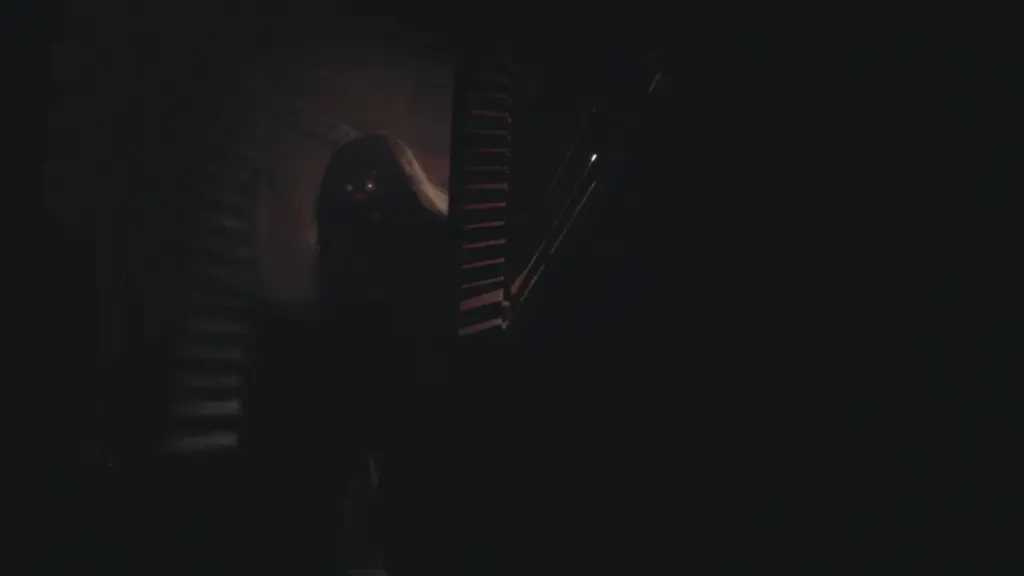
The film does the “found footage” thing quite well, with our narrator and point-of-view character, Philip Howard, being a film student who is making a documentary about his life, and becomes obsessed with the strange man in the attic and his otherworldly music. The film also leverages the use of Meta-style glasses to provide a second POV by which Howard records everything without consent. In any case, the film uses a standard digital video camera and these glasses quite well and maintains the found-footage experience.
That is until it doesn’t, and that is where I find myself stuck.
At the climax of this short, Philip uncovers a strange crystal covered by a cloth and as a cosmic horror protagonist must, touches it. The Palantír-like crystal provides visions of a cosmic history, revealing otherworldly beings, apocalyptic danger, and the role men like Mr. Sze play in staving off this otherworldly presence through music.
It is visually stunning, and also completely destroys my immersion in the story and the film never quite recovers from it. We have been firmly in the POV of Philip until this point, channeled through technology. With this moment, that is no longer the case, and we are now in his head; verisimilitude sacrificed for narrative convenience, and it disappointed me. Even as the film returns to the camera-perspective, the frame is now distorted, altered into a wider form. That makes for a good metaphor for Philip’s altered view upon acquiring cosmic insight – I have no issue there.
None of what we see in Philip’s visions upon encountering the crystal makes sense as “on-camera” elements. I suppose you could make the argument that it is cosmic and otherworldly; maybe it somehow works. Somehow. But for me, it just does not. The film hooked me with how it uses the camera and jettisoning that angle for narrative convenience feels like a problem that could have had a more inventive solution.
It didn’t ruin the short film, but it did break the immersion that it had so wonderfully developed until that point. And the thing is, I think if that scene were removed, the film would work just as well: Philip encounters the crystal, there is visual distortion, we get him seizing behind the camera and then suddenly and mysteriously, the film’s dimensions change as Mr. Sze bursts into the attic as the otherworldly presence begins to enter the world.
Overall, I will say that “The Music of Mr. Sze” is the best of the crop of shorts in V/H/S/Mixtape, but even here, I can’t help but find something about it I can be critical of. I sometimes worry that I ruin these experiences for myself. But that is what comes with the foundations of this franchise, doesn’t it? If you establish fidelity to the camera and casually disregard that fidelity, you lose what makes the franchise work best. But regardless, “Mr. Sze” is still the brightest spot in perhaps the dullest and least-committed entry into the anthology series yet. Maybe the only track worth repeating in this mixtape.
This has been an installment of Graphic Content; support my writing by joining me on Ko-fi.
