



A little bit about teaching in today’s 31 Days of Halloween post involving the classic film Night of the Living Dead (1968). I did my screening of the film for the semester, something I do a couple of times a year, and noticed the same thing happening, year after year. Decided to write about that a bit.
Anyway, do you think I am off-base here, or am I just an elder Millennial who is being a grump? Let me know!
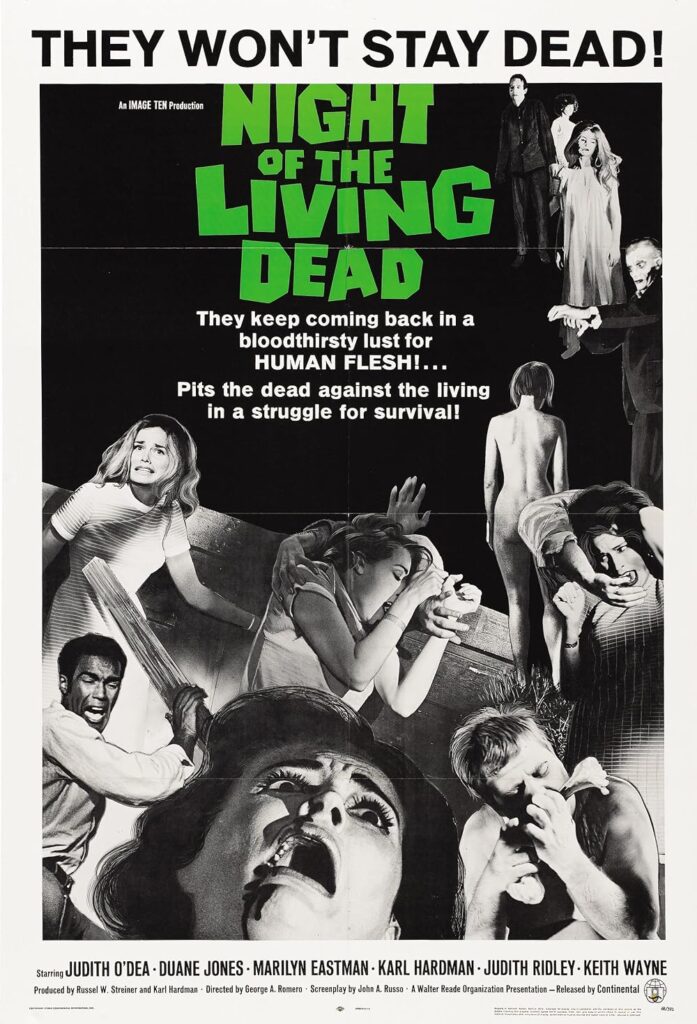
Watching Night of the Living Dead (1968) with Gen Z and Gen Alpha students is always a little weird but inevitably ends up the same – some laughing at awkward moments in the film due to budgetary limitations and aesthetic and acting choices of the period, which feel dated, and then shock and dismay at the fate of Ben at the end of the film. Every time. It’s fascinating to me as someone who uses George Romero and John Russo’s classic film in the classroom.
One of the classes I teach is English C1001, which is a critical thinking course. I focus on the theme of horror and monstrosity because it presents a consistent analytical throughline to help explore writing and argument. Monsters (largely fictional, as they are) are representations, and those representations can vary wildly from person to person. Through applying critical thinking, I have students interrogate their interpretations of monster texts while analyzing the interpretations of writers who write on monster texts.
Zombies and Night of the Living Dead provide plenty of opportunities for critical thinking. Most of these students have very real memories of COVID-19, and there is a thematic resurgence of zombie concepts that emerged during that period. When I present the unit on zombies, it comes at the tail end of a block of lectures based on the 1950s and 1960s, and includes an essay about the Marxist interpretations of zombies in Romero’s “of the Dead” series. It’s probably the most straightforward unit of class outside of the week on Godzilla.
In any case, it can be hard enough to get students to actually engage with the texts at home, which is why I end up screening the movie in class. I have been doing that for at least six years now. It presents a fun day (though getting Gen Z and Alpha to actually watch anything outside short-form video is like pulling teeth) and ultimately gives me a foundation upon which I can lecture about the material, given the majority of the class has at least a familiarity with the text.
The following isn’t meant to be a generational discourse bitch session about a lack of seriousness in kids these days, though I really feel like I could lean into that. This is more a series of observations of a practice I have engaged with two to three times a year for about six years now.
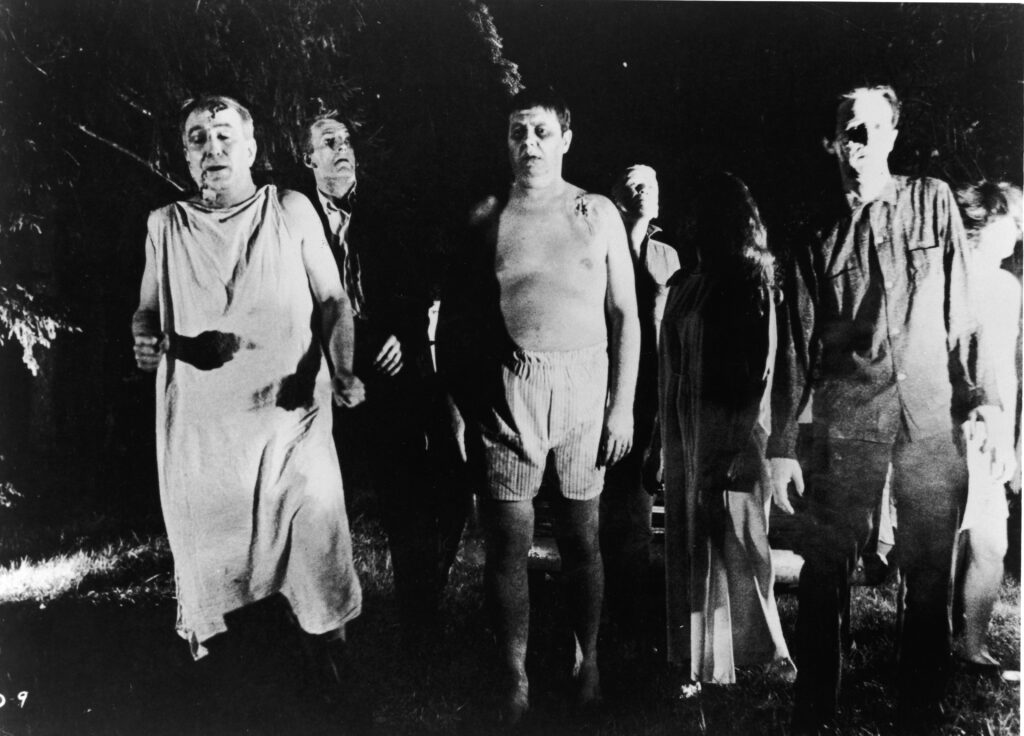
Empathy and Sincerity Are Cringe
Maybe the most challenging part I have found in trying to engage students with the film in question is the aura of indifference to empathy and sincerity I tend to see. It feels like sometimes they forget that we’re human beings, even fictional ones, and such understanding can and should be applied to scenarios.
I’ve heard and read quite a bit lately on the concept of performative apathy, where sincerity or engagement is generally frowned upon, and instead a kind of bleak reaction to existence fuels an indifference or mockery toward sincerity. And this is also a broad generalization that does not account for other aspects of life, either. I’m just talking about a zombie movie from half a century ago, after all.
I am looking at this as a lover of arts and literature and someone deeply curious about socialization across generations, and in many ways, I absolutely get it. As a Millennial, I understand that adage of “I am tired of living in interesting times,” and with the accelerationist nature of our capitalistic hellscape, Gen Z (and Gen Alpha) are taking just as much of a pounding as Millennials did in their day, only with even fewer support systems in place. The horrors of my generation persist and grow stronger two generations later.
Apathy is risk avoidance. It is easier to look like you do not care than to risk being ostracized for taking something too seriously or getting too into something. Caring is cringe.
And yes, I am still talking about students’ reactions to elements of a zombie film. It’s not that serious, but it can suggest serious issues in the long run when it comes to interpreting art and literature and drawing meaning from these things.
The Kids Aren’t Alright
Night of the Living Dead is an old film. It is still broadly respected and given significance by larger culture, but often only really discussed or embraced as such by older generations in comparison to Gen Z and Alpha. The film undoubtedly has hokey elements to a newer audience, given the low budget and half a century of developing zombie imagery. But I also think it ultimately wins them over to a degree.
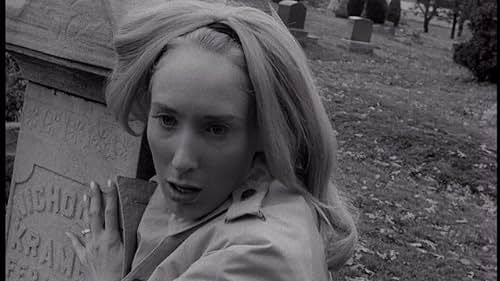
The things I notice every screening are that there is laughter when Ben (Duane Jones) strikes Barbra (Judith O’dea), and audible shock when Ben is shot at the end of the film. I can’t claim that one reaction is inappropriate while another is, as people react in the way in which they react. But I do often find myself puzzled and maybe even a bit concerned about Ben striking Barbra being a source of humor so often while his death hits in the way that I would expect it to hit.
A lot of the reaction to Barbra being struck, to me, speaks to the performative apathy seen in Gen Z and Alpha. As I see it, the laughter comes from the sudden, uncomfortable violence and an inability to understand the reasoning for it.
In the first scenario, regarding the sudden violence, the scene is a complete shock even today. A Black man hits a white woman who is in hysterics. The violence can come off as gendered, antiquated, and hard to reconcile with the character of Ben seen until that point. Laughter may be a response to the discomfort of the mental calculus involved in interpreting the scene, especially given today’s thoughts on gendered violence and race. I find this pretty interesting, as this is probably the same kind of tension audiences faced when dealing with this scene in 1968. As much as Night of the Living Dead is seen as a Civil Rights Era film today, it was largely a coincidence. Romero himself confirms he didn’t cast Duane Jones as Ben for any pointed messaging, but recognizes what that did to the impact of the overall film. It most certainly also influenced his decisions on future films as he leaned into his politics.
But back to the hit. Every time I screen the film for a class, I hear the sound of laughter when Ben slaps the hysterical Barbra. Do I take that as a sign that I am surrounded by emotionally stunted misogynists? No, though there are some students I’ve had that I might question, if I am being honest. Instead, I think this leads to my second point: a lack of understanding for why this moment happens. Or maybe more to the point, a refusal to allow themselves to feel something about the situation.
Mid-century Hollywood does a lot with hysterical women. Oftentimes, those portrayals were so over the top that collectively we’ve pushed back against them. Even though Night of the Living Dead is an independent film, it was heavily influenced by Hollywood horror and monster films; such things are unavoidable when trying to work with a system from the outside. There is definitely a larger topic to be discussed here about the portrayal of women in mid-century film. I have no time to get into it here, but most of us probably inherently recognize what I am alluding to. Barbra in Night of the Living Dead is of that mid-century hysterical female mold that today might be seen as cloying or as a poor portrayal of women. In a lot of ways it is, but as a counterpoint I would point to the Barbra of the 1990 remake who has far more agency. If we judge films solely on the era in which they are made, we are being poor participants in culture.
While Barbra’s characterization fits the antiquated model that most audiences might reject today, it is not a bad one and not inaccurate to the situation. The problem is, to recognize this, one needs to have empathy, not apathy, for the characters and situation. One needs to have an emotional investment in the story playing out to recognize what that scene is doing.
And as we already know, caring is cringe.
I will have Gen Z and Alpha students who get into the film and are able to form that connection to understand what is going on in that moment. It helps cut through the performative apathy and awkwardness of the sudden violence because they understand why it occurs. They also recognize the depth it adds to the portrayal of Ben and Barbra. But this is also the exception to the rule.
For most students, I find that performative apathy has made it hard for them to get into film and understand it from the context it provides them. Without really understanding Ben’s mental breakdown when he monologues his survival story, they do not understand why he reacts the way he does to Barbra’s dissociative episode. I’ve found many do not even understand what the dissociative episode actually is, in the context of the story, though the film practically holds the audience’s hand with clues as to what is happening to Barbra following her escape from the graveyard.
So without being able to invest themselves in the film for whatever reason, perhaps boredom, or more likely sincerity avoidance, they see the sudden violence not as a key moment of characterization, but rather a sudden jolt of what they might interpret as misogynistic violence they awkwardly laugh through because any more complex feelings would potentially make them a target if anyone found out they had them.
Thinking about art means you care about art, and caring is cringe.
So then why does Ben’s death hit so hard?
Generations Change, but Some Things Never Do
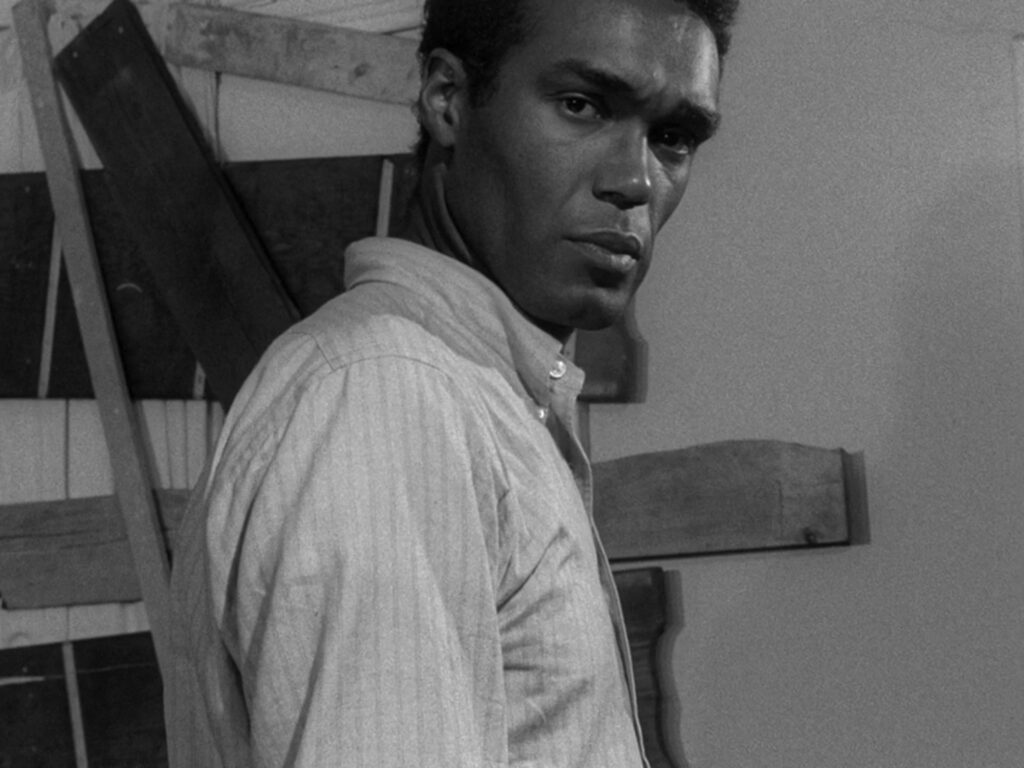
One thing that has not changed across generations is systemic violence toward Black bodies in the United States. Night of the Living Dead was released a few months after the assassination of Dr. Martin Luther King Jr. The film portrays a heroic, complex Black protagonist who is ultimately robbed of his life by systemic white violence. His body is then treated like firewood, hooked, dragged, and burned in a bonfire, with nobody acknowledging the humanity that Ben once had.
Ben ultimately survives the night, a lone survivor, only to be callously crushed by systemic authority like so many Black men in real life from the release of the film to the present day. The hardest part of that ending is seeing it slowly play out, unavoidable. The minute the posse takes shots at zombies outside and Ben begins creeping to the window, you know he will die.
And yet, the death still hits like a truck. The students, too, feel it.
Maybe it is the deluge of continual brutality on Blackness seen in the news and in their lives? It could be that it is something so real and evocative that they cannot simply turn and laugh at it to show they are above caring. Ben’s death, the casual indifference of the universe to a person they end up caring for (a fictional one at that!), may be that one chip in the barricade of indifference they have erected around them. Maybe it is okay to feel something, and maybe it isn’t all that cringe after all.
This has been an installment of Graphic Content; support my writing by joining me on Ko-fi.
